
Decorative Epoxy Flooring: Everything You Need to Know for a Flawless Finish
Understanding Decorative Epoxy Flooring and Its Benefits
Decorative epoxy flooring is a multi-layer resinous coating system that bonds directly to concrete, combining industrial-strength protection with a wide range of colors, textures, and finishes. It is used in garages, commercial lobbies, warehouses, food processing plants, and more.
Quick answer — what you need to know:
Feature Details Types Vinyl flake, quartz aggregate, metallic pigment, mica flake Lifespan 10–20 years with proper installation and maintenance Key benefits Seamless, chemical-resistant, slip-resistant, easy to clean Best for Garages, warehouses, commercial kitchens, showrooms, industrial facilities Average cost $1,500–$3,000 for a two-car garage; varies by system and size Installation Professional recommended; most projects completed in one day
Most concrete floors — even heavily used industrial ones — look dull, crack over time, and trap contaminants in their pores. Decorative epoxy solves all three problems at once. It seals the surface, adds visual appeal, and creates a hygienic, seamless layer that can handle chemical spills, heavy traffic, and demanding environments.
That's why facility managers across manufacturing, food processing, and warehousing are increasingly turning to decorative epoxy systems. The floor does more than look good — it works harder than bare concrete ever could.
I'm Mark Barr, owner of Duraguard Solutions and a specialist in industrial and commercial floor coating systems, with extensive hands-on experience designing and installing decorative epoxy flooring for warehouses, food processing plants, and manufacturing facilities across Wisconsin and Illinois. In this guide, I'll walk you through everything you need to make the right decision for your facility.
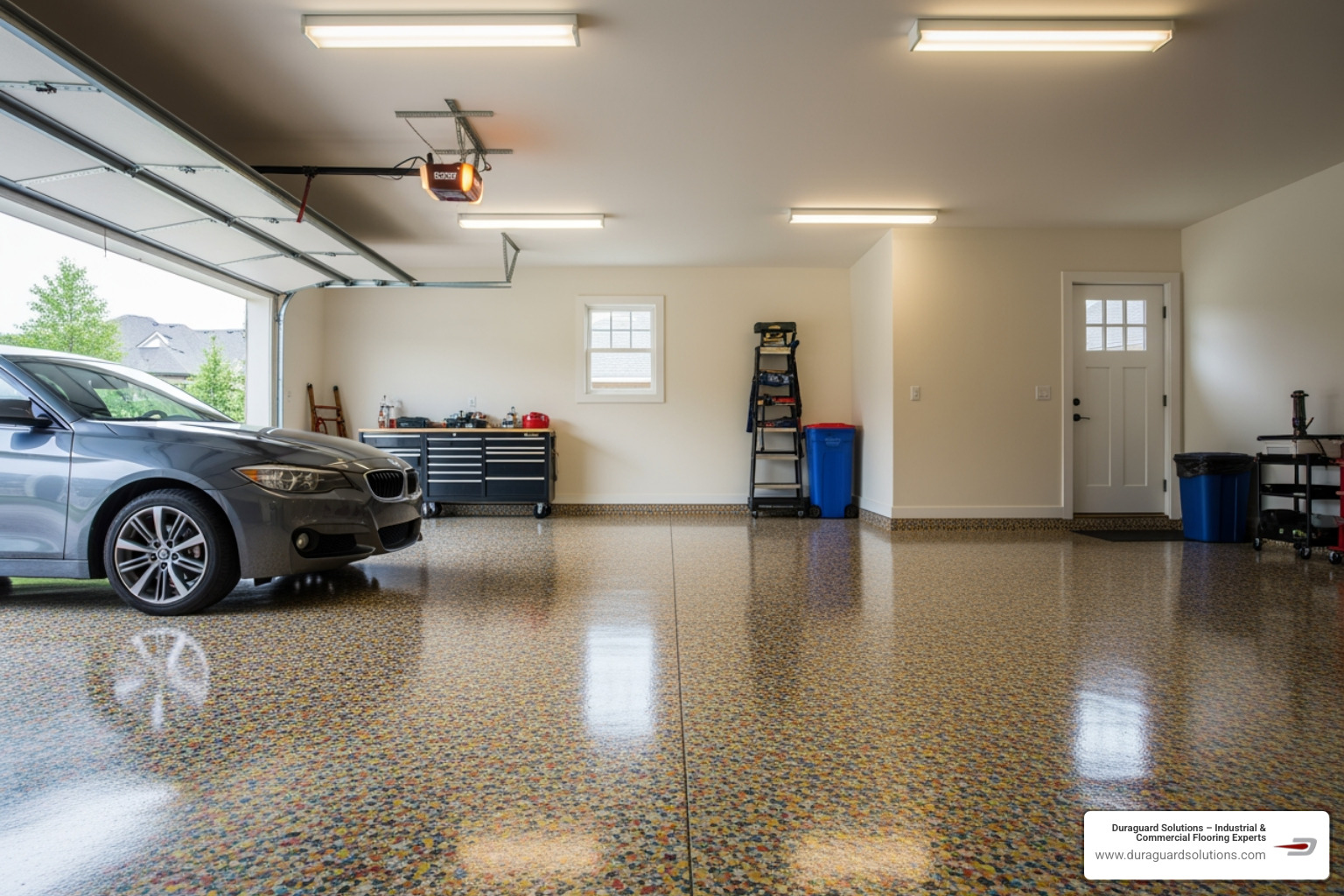
When people hear "epoxy," they often think of the grey, clinical floors found in old hospital basements. While standard epoxy coatings are functional, decorative epoxy flooring takes that industrial foundation and adds an aesthetic punch.
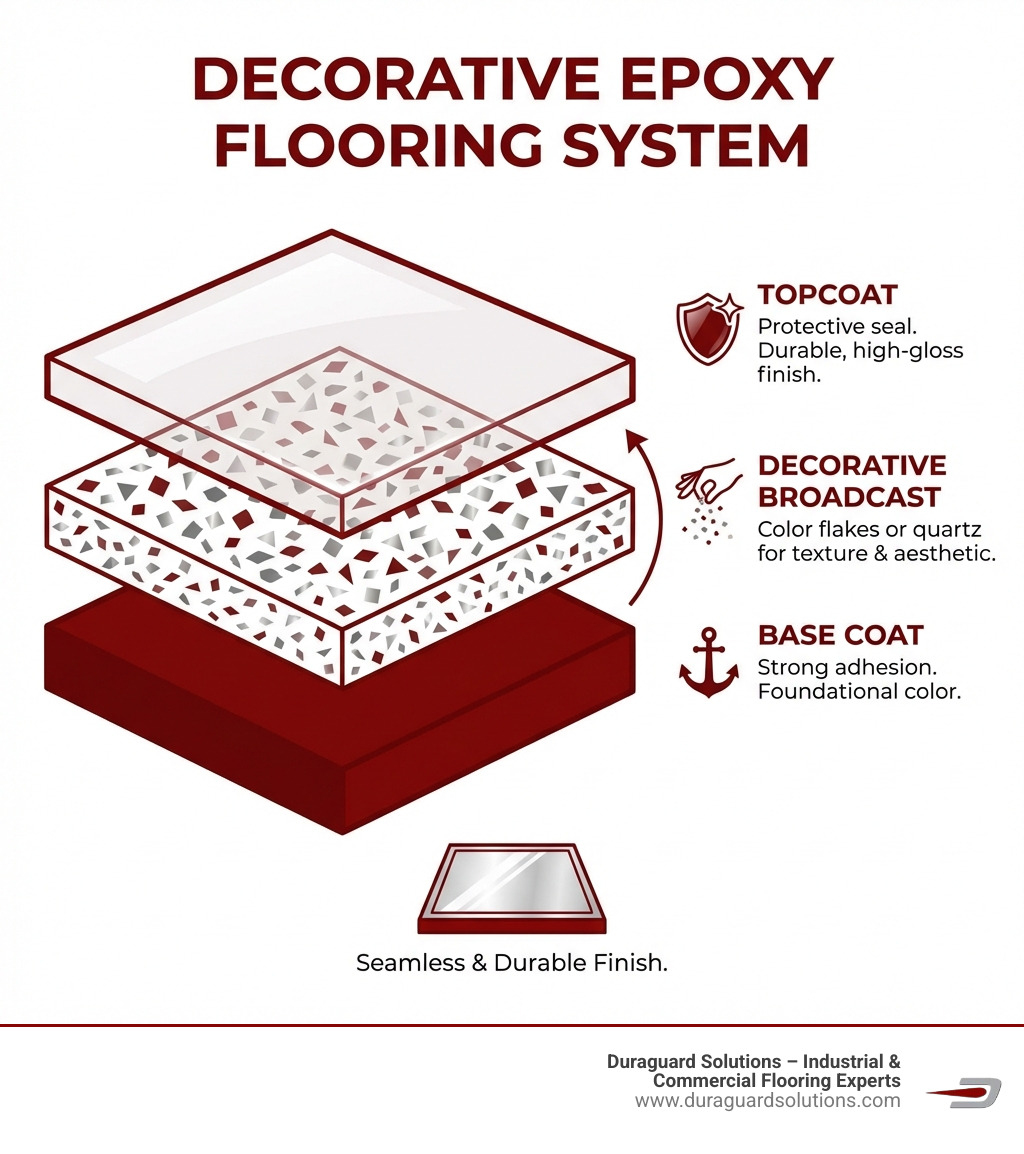
The primary difference lies in the "media" or decorative elements broadcasted into the wet resin. While a standard coating might just be a solid color, decorative systems use vinyl flakes, colored quartz, or metallic pigments to create depth and texture. These systems use high-performance resinous binders—typically 100% solids epoxy—that chemically bond to the concrete substrate.
For homeowners in Illinois and Wisconsin, this is a game-changer for residential garages. It protects against the brutal salt and snow we drag in during the winter. For business owners, it’s about more than just looks. In commercial lobbies or industrial settings, decorative flooring systems offer a unique combination of property value enhancement and extreme durability.
Key Benefits Include:
Seamless Hygiene: Unlike tile, there are no grout lines to trap bacteria or dirt. This is critical for food processing and healthcare.
Chemical Resistance: These floors shrug off oil, grease, salt, and harsh cleaning chemicals.
Impact Protection: The thick build of a decorative system provides a buffer against dropped tools or heavy machinery.
Safety: By adding texture through quartz or flake, we can customize the slip-resistance level to meet OSHA standards.
Popular Types of Decorative Epoxy Flooring Systems
Choosing the right system depends on your environment and your "vibe." Here are the heavy hitters:
Vinyl Flake Systems: These use small acrylic chips available in endless color blends. They are the "gold standard" for garages and corridors because they are incredibly forgiving—they hide small imperfections in the concrete and provide a natural, textured look.
Quartz Aggregate: This system involves broadcasting multi-colored, ceramic-coated sand into the epoxy. It is much harder and more industrial than flake. Duraquartz decorative flooring is our go-to for heavy-duty commercial kitchens and locker rooms where slip resistance is the top priority.
Metallic Pigments: If you want a "wow" factor, this is it. We use pearlescent pigments to create a marbled, 3D effect that looks like molten metal or natural stone.
Mica Flakes: These are natural mineral flakes that provide a metallic luster, mimicking high-end granite or marble tile.
Feature Flake System Quartz System Metallic System Primary Use Garages, Retail, Schools Industrial, Kitchens Showrooms, Offices Durability High Extreme Medium-High Slip Resistance Excellent Superior Moderate (needs additives) Texture Orange Peel Sandpaper-like Smooth/Glassy
2025 Design Trends and Customization
As we move into 2025, we’re seeing a shift away from the "neon blue" garage floors of the past. Trends are leaning toward architectural integration.
Earth Tones: Warm greys, tans, and "greige" blends that make a garage feel like an extension of the home.
Matte Finishes: While high-luster gloss is still popular, many commercial spaces are opting for satin or matte topcoats to reduce glare and hide micro-scratches.
Marbled Effects: Metallic epoxy is being used to create sophisticated, subtle marble looks rather than aggressive, high-contrast swirls.
Personalized Logos: We can embed vinyl decals or stenciled logos directly into the floor layers—perfect for branding a commercial lobby or a "man cave."
The Installation Process: From Preparation to Topcoat
A "flawless finish" isn't an accident; it's the result of a rigorous process. Most of our professional installations in the Midwest can be completed in just one to two days, but the steps must be followed perfectly.
Surface Preparation: This is 90% of the job. We use industrial diamond grinders to remove old coatings and open the "pores" of the concrete.
Moisture Testing: We check the concrete for moisture vapor transmission. If it's too high, the epoxy will peel. In these cases, we apply a specialized moisture barrier.
Crack and Divot Repair: We use high-strength epoxy fillers to ensure the substrate is perfectly level.
The Primer/Base Coat: A 100% solids epoxy layer is applied. This is the "glue" that holds everything together. For more on the chemistry, check out our floor coatings page.
Broadcasting Media: While the base coat is wet, we broadcast the flakes or quartz. For a "full broadcast," we use about 12 to 20 pounds of media per 100 square feet to ensure total coverage.
Scraping and Vacuuming: Once cured, we scrape off the excess media to ensure a uniform texture.
Topcoat Application: We apply a clear, protective layer. In areas with sunlight, we always use a UV-stable polyaspartic topcoat to prevent yellowing.
Critical Surface Preparation Steps
You can buy the most expensive resin in the world, but if the concrete isn't ready, it will fail. One of the biggest mistakes we see is acid etching. While DIY kits suggest it, acid etching is unreliable and often leaves behind chemicals that repel the epoxy.
We insist on mechanical preparation—either diamond grinding or shot blasting. This creates a "concrete surface profile" (CSP) that allows the resin to "hook" into the floor. We also look for contaminants like oil or grease. If the floor was a mechanic shop for 20 years, it needs deep cleaning to ensure bonding strength. For areas prone to dampness, installing waterproof flooring systems with a vapor barrier is the only way to prevent delamination.
Performance, Durability, and Maintenance Tips for Decorative Epoxy Flooring
How long does it last? A properly installed decorative epoxy flooring system should last 10 to 20 years. In a residential garage, it might even last longer.
Durability isn't just about how hard the floor is; it's about how it handles stress. In industrial settings, we worry about thermal shock. If you’re in a food processing plant and wash a 30°F floor with 140°F water, standard epoxy might pop off. We use specialized urethane mortars in those cases to handle the expansion and contraction.
Safety and Stability:
Slip Resistance: We can adjust the "grit" of your floor using additives like aluminum oxide or glass beads. This ensures the floor is safe even when wet.
UV Stability: Standard epoxy yellows when exposed to sunlight (think of that yellow tint on old surfboards). We solve this by using polyaspartic technology for the final layer, which stays crystal clear for decades.
Warranties: We provide robust warranties, often up to 15 years against delamination, giving you peace of mind that your investment is protected.
Maintenance Tips for Decorative Epoxy Flooring
One of the best things about these floors is that they are "low maintenance," but that doesn't mean "no maintenance."
Daily Sweeping: Dust and grit act like sandpaper. Use a soft-bristle broom or a dust mop to keep the surface clear.
pH-Neutral Cleaners: Avoid harsh acids or "soap-based" cleaners that leave a film. A simple mixture of warm water and a pH-neutral cleaner (like Simple Green or ammonia-free Windex) works best.
Spill Management: While the floor is chemically resistant, don't let battery acid or harsh solvents sit forever. Wipe them up promptly.
Soft Scrubbing: For heavy dirt, use a soft-bristle mechanical scrubber. Never use stiff wire brushes.
Rolling Protection: In offices, use plastic mats under rolling chairs to prevent the "shine" from wearing off over several years.
For high-traffic facilities, we recommend high-performance industrial flooring systems that are specifically engineered for easy decontamination.
Choosing the Right Decorative Epoxy Flooring for Your Space
Choosing a floor is a balance of traffic volume, light reflectivity, and budget.
If you are running an automotive showroom flooring project, you want high light reflectivity to make the cars pop. Metallic or high-gloss flake systems are perfect here. However, if you're managing an assembly or warehouse flooring project, you might prioritize a high-build quartz system that can withstand forklift traffic and heavy pallets.
Cost Factors: The average cost for a two-car garage typically ranges between $1,500 and $3,000. Factors that influence the price per square foot include:
Condition of the Concrete: Heavy cracking or oil saturation requires more prep work.
System Type: Metallic epoxy is generally more expensive than a simple flake broadcast.
Full vs. Partial Broadcast: A "full broadcast" (where you can't see the base coat at all) uses more material and labor but offers much better durability and hide.
Comparing Epoxy to Polished Concrete
Many clients ask if they should just polish their concrete instead. While polished concrete is trending, it isn't always the best choice for every environment.
Imperfections: Polished concrete shows every crack and stain in the original slab. Decorative epoxy covers them.
Chemical Resistance: Epoxy provides a topical barrier that is much more resistant to acids and oils than polished concrete.
Hygiene: Epoxy is truly monolithic (one piece). It eliminates the tiny pores where bacteria can hide, making it the winner for food processing flooring systems.
Repairability: It is often easier to "patch and topcoat" an epoxy floor than it is to re-grind and re-polish a damaged concrete section.
Frequently Asked Questions about Decorative Epoxy
Can decorative epoxy be used outdoors on patios or pool decks?
Yes, but with a major caveat: you must use a UV-stable topcoat. Standard epoxy will chalk and peel in the sun. We typically use polyaspartic resins for these applications. We also recommend a more aggressive anti-slip texture for pool decks to ensure safety when wet. For walkways and promenades, our pedestrian deck systems are designed specifically for weather resilience.
Is DIY installation recommended or should I hire a professional?
We might be biased, but the numbers don't lie. Most DIY kits found at big-box stores are "water-based" epoxies with low solids content. They don't bond as well and often peel within 2 years. Professional installation uses industrial-grade resins and specialized equipment like HEPA-filtered diamond grinders. When you factor in the cost of renting equipment and the risk of a "stuck" floor that won't cure, professional installation is usually the more cost-effective long-term choice. It’s the difference between a floor that lasts 2 years and one that lasts 20. This is especially true for high-stakes environments like aircraft hangar flooring.
What are the most common mistakes to avoid during installation?
Ignoring Humidity: High humidity can cause "blushing" or a cloudy finish.
Poor Mixing: If the two parts of the epoxy aren't mixed at the exact ratio for the exact amount of time, you'll get "soft spots" that never dry.
Rushing the Cure: Walking on a floor too early can leave permanent footprints.
Skipping Moisture Tests: This is the #1 cause of floor failure in the Midwest. Always test for moisture vapor before coating. This is vital in mechanical room flooring where dampness is common.
Conclusion
At Duraguard Solutions, we don't just "paint" floors; we engineer surfaces that stand up to the toughest conditions in Illinois and Wisconsin. Whether you are looking for a stunning metallic finish for a showroom or a heavy-duty quartz system for an industrial plant, we have the expertise to ensure a flawless result.
Decorative epoxy is an investment in your property's future. It turns a liability—cracked, dusty concrete—into a high-performance asset. If you're ready to transform your space with a floor that is as durable as it is beautiful, we are here to help.
Contact Duraguard Solutions for a free estimate today and let's discuss your project!
