
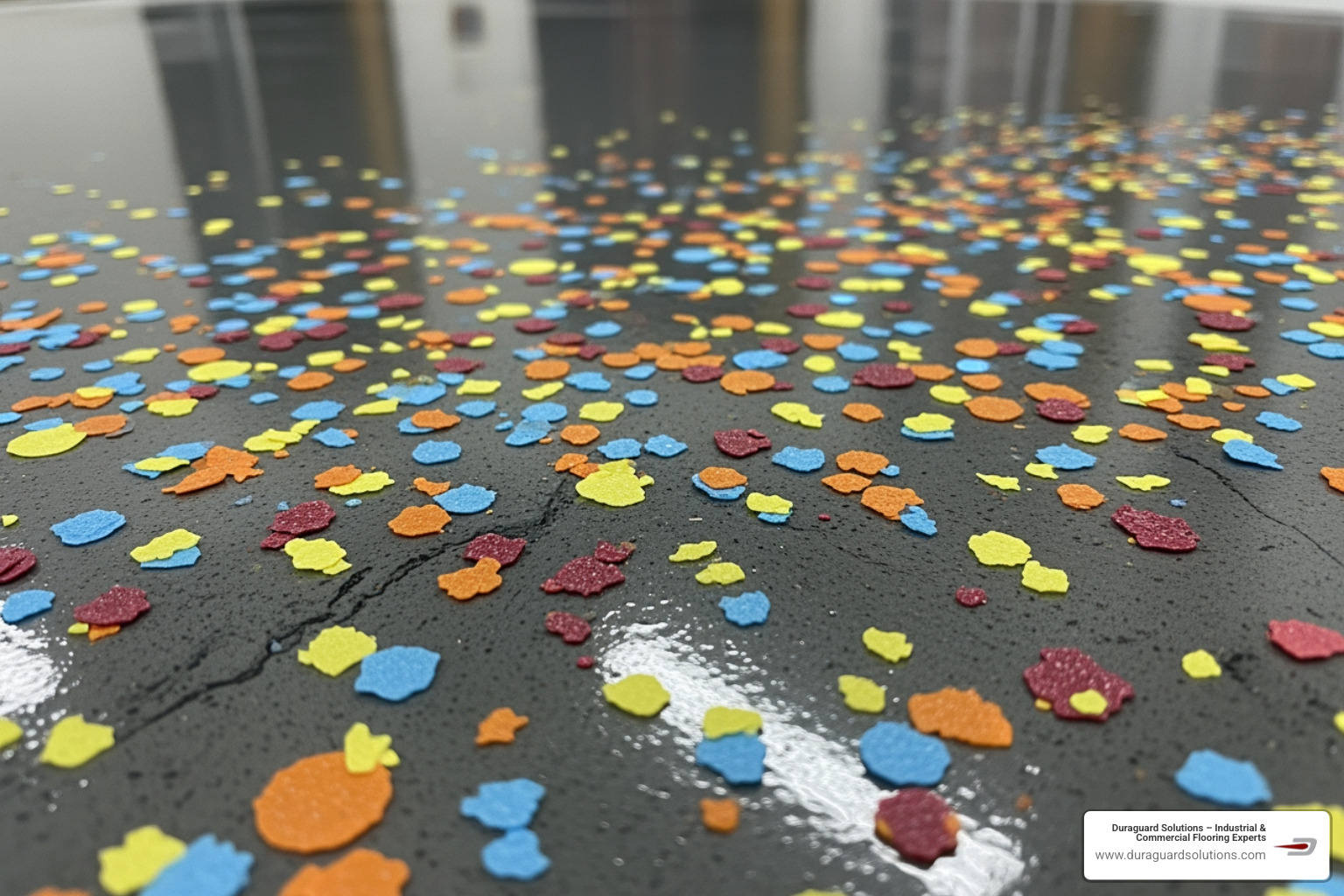
Flake Out: Our Favorite Decorative Flakes for Concrete Projects
Why Decorative Flakes for Concrete Are Worth a Closer Look
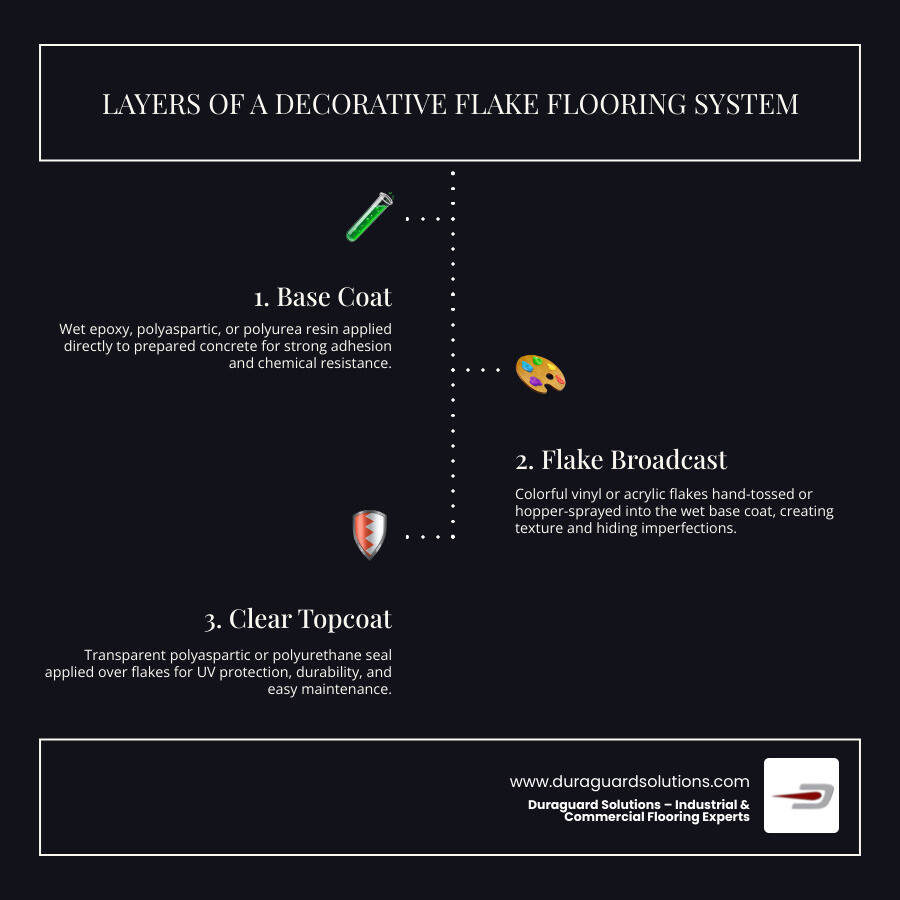
Decorative flakes for concrete are small vinyl or acrylic chips broadcast into a wet resin base coat to create a durable, attractive, and slip-resistant floor finish. Here's a quick overview of what you need to know:
What they are: Randomly shaped, standardized-size polymer chips embedded in epoxy, polyaspartic, or polyurea coatings
Sizes available: 1/16", 1/8" (popular), 1/4" (most popular), 1/2", and 1"
Coverage rates: Light (0.25–2 lbs/100 sq ft) to full broadcast (10–25 lbs/100 sq ft)
Where they're used: Garages, warehouses, commercial kitchens, healthcare facilities, retail spaces
Key benefits: Hides concrete imperfections, improves slip resistance, adds texture, and can last 10–20+ years
Top color options: 240+ pre-mixed blends available, from neutral Salt & Pepper to bold custom mixes
These aren't just a cosmetic upgrade. In demanding environments like food processing plants, manufacturing floors, and distribution centers, flake systems deliver a seamless, non-porous surface that's easy to clean, chemically resistant, and built to handle heavy use.
I'm Mark Barr, owner of Duraguard Solutions and an industrial flooring specialist with extensive hands-on experience designing and installing decorative flakes for concrete across facilities in Wisconsin and Illinois. In this guide, I'll walk you through the best options we recommend for real-world commercial and industrial projects.
The Versatility of Decorative Flakes for Concrete
When we talk about decorative flakes for concrete, we aren't just talking about "paint chips." These are high-performance polymer aggregates specifically engineered for resinous flooring systems. Unlike standard paint, these flakes are made of colorfast pigments, meaning the color goes all the way through the chip. This is crucial for industrial environments where surface scratches are inevitable; even if a chip is slightly abraded, the color remains consistent.
One of the greatest strengths of these flakes is their random shape. Because they aren't uniform, they break up the visual field of the floor. This makes them absolute masters at hiding sub-surface imperfections like small cracks, pits, or uneven patches in the concrete slab. Beyond aesthetics, they provide a significant safety boost. By creating a textured surface, they increase slip resistance—a non-negotiable requirement for commercial kitchens or wet manufacturing areas.
Furthermore, flake systems offer surprising acoustic benefits. The multi-layered nature of the chips and resin helps with noise deadening, reducing the "clatter" often found in large, open warehouses or retail showrooms. For those interested in the technical composition and safety standards of these materials, you can review the Salt & Pepper Deco-Flakes Technical Data to see how they meet industry requirements.
At Duraguard Solutions, we often recommend these systems because they are highly customizable polymer flooring systems that can be tailored to match brand colors or safety zoning requirements.
Popular Sizes and Materials for Decorative Flakes for Concrete
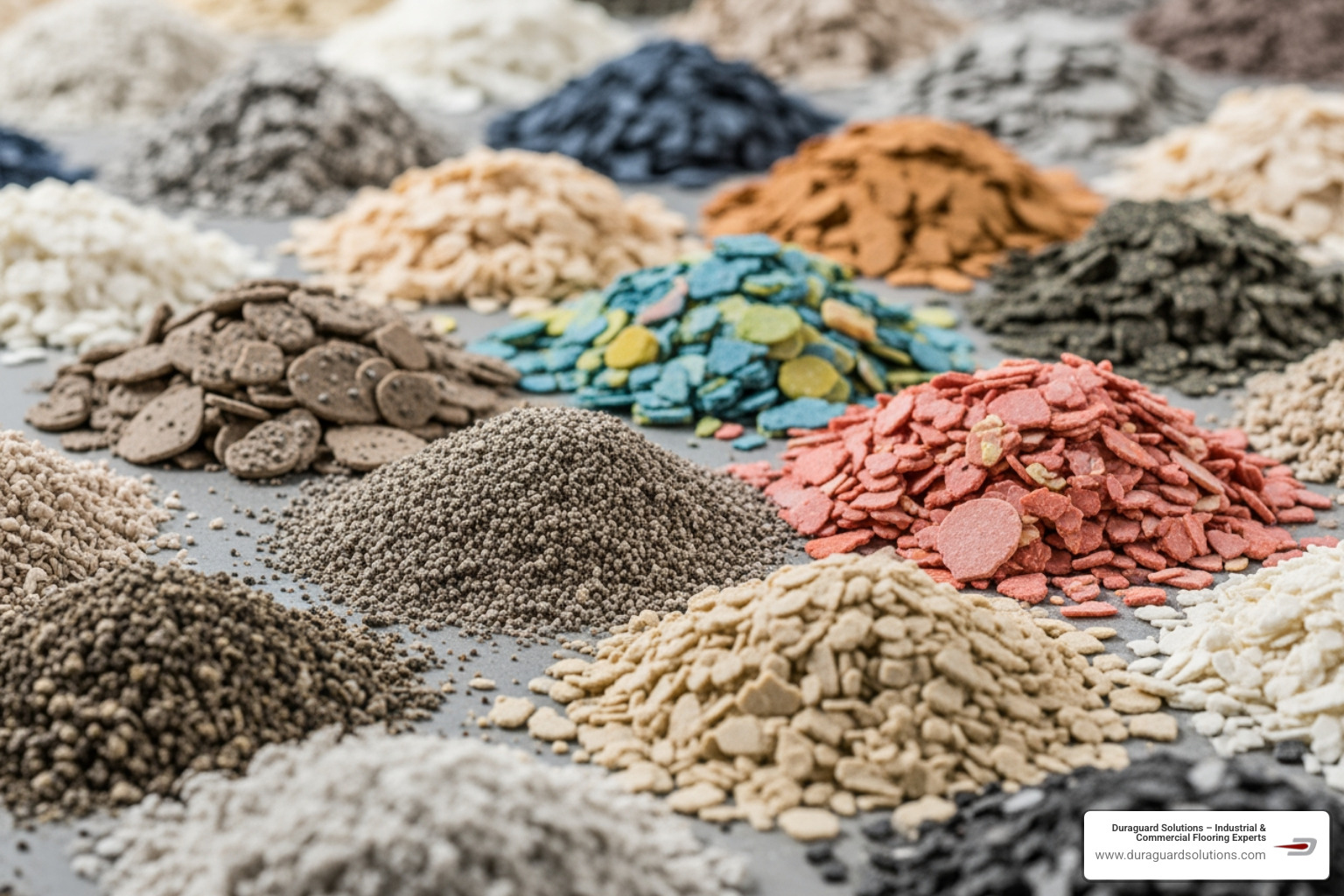
The industry standard for decorative flakes for concrete is the vinyl chip, though acrylic options are also common. Choosing the right size is the first step in defining your floor’s "personality":
1/4 Inch (The Heavy Hitter): This is the most popular size for a reason. It provides a balanced look that mimics granite or terrazzo. It's large enough to hide most concrete flaws but small enough to look sophisticated.
1/8 Inch (The Fine Detail): Often used in healthcare or high-end retail, these smaller chips create a tighter, more uniform pattern. They are excellent for smaller spaces where a 1/4" flake might feel overwhelming.
Micro-flakes (1/16 Inch): These are used for a very subtle, almost sandy texture.
Hybrid Stone and Terrazzo Blends: These specialized flakes use varied shapes and muted tones to perfectly simulate expensive stone flooring at a fraction of the cost.
Setting Compatibility: Residential to Industrial
We see these systems everywhere because they work everywhere. In residential settings, they are the gold standard for garage floors and basements because they handle vehicle traffic and moisture without peeling.
However, their true home is in the commercial sector. In healthcare facilities, the seamless nature of a full-broadcast flake floor prevents bacteria from hiding in grout lines. In retail, the aesthetic appeal draws the eye. For heavy-duty environments, we utilize high-performance industrial flooring systems that integrate these flakes into thick, impact-resistant resins capable of withstanding forklift traffic and chemical spills.
Application Methods and Coverage Rates
Applying decorative flakes for concrete is as much an art as it is a science. You have to work quickly while the base coat is "wet" to ensure the flakes embed properly. If the resin begins to tack over before the flakes hit it, they won't stick, leading to "bald spots" in your floor.
Choosing the Right Coverage for Decorative Flakes for Concrete
The amount of material you need depends entirely on the look you want to achieve. We generally categorize coverage into four levels:
Light Broadcast (0.25–0.5 lbs per 100 sq ft): This leaves most of the base coat color visible. It’s a "speckled" look often used in budget-friendly garage projects.
Medium Broadcast (0.5–2 lbs per 100 sq ft): A more intentional pattern where the flakes are clearly the star, but the base coat still provides the background color.
Heavy Broadcast (2–4 lbs per 100 sq ft): Very little base coat is visible. This provides significant texture and durability.
Full Broadcast (10–25 lbs per 100 sq ft): This is what we do for 90% of our industrial clients. We throw the flakes until the floor is "saturated"—meaning the base coat is completely covered. This requires about 10 lbs per 100 sq ft for standard systems, though some high-build systems may require up to 25 lbs.
For a visual demonstration of the movement required, you can watch this video that showcases how to walk across the floor while throwing color flakes. The key is to toss them high into the air, letting them "rain" down evenly rather than throwing them directly at the floor, which creates clumps.
Essential Tools and Safety Equipment
To do this right, you need more than just a bucket of chips. Professional installation requires:
Spiked Shoes: These allow the installer to walk directly onto the wet resin to broadcast flakes without leaving footprints or disrupting the coating.
Hopper Blower Gun: For large industrial spaces, we often use a hopper gun to blow the flakes evenly across 15–20 foot spans.
Metal Scrapers: Once the floor is dry, these are used to "knock down" any flakes that are standing straight up, ensuring the final floor is smooth to the touch.
Industrial Vacuums: To remove the pounds of excess flakes left over after a full broadcast.
Safety Gear: Eye protection and respiratory safety are vital, especially during the concrete grinding and resin mixing phases.
Comparing Decorative Flakes, Quartz, and Glitter
While decorative flakes for concrete are our most requested additive, they aren't the only option. Depending on your facility's needs, you might consider quartz or glitter.
Feature Decorative Flakes Decorative Quartz Glitter/Metallic Flakes Material Vinyl/Acrylic Polymer Natural Sand/Ceramic Coated Polyester/Metallic Film Primary Benefit Aesthetics & Imperfection Hiding Extreme Durability & Traction High-Visual Impact/Bling Texture Adjustable (Orange Peel) Aggressive (Sandpaper-like) Smooth/Glossy Best For Garages, Retail, Schools Commercial Kitchens, Pool Decks Showrooms, Bars, Salons Durability High Extreme Moderate
Quartz is essentially a "super-duty" version of a flake floor. Because quartz is a hard mineral, it offers much higher abrasion resistance. For areas that are constantly wet or greasy, our Duraquartz decorative flooring is the preferred choice for safety and longevity.
Professional Installation and Maintenance
A flake floor is only as good as the concrete underneath it. At Duraguard Solutions, we spend 70% of our time on prep. This involves diamond grinding the slab to open the pores of the concrete, repairing any cracks with industrial fillers, and ensuring the surface is vacuumed bone-dry.
Once the prep is done, we apply the base coat. In industrial settings, we often use chemically resistant flooring systems to ensure the floor isn't damaged by oils, acids, or harsh cleaning agents.
Step-by-Step Flake Integration
Base Coat Application: We mix a self-priming polyurea or epoxy and roll it out evenly. We always "cut in" the edges first.
The Broadcast: While the coat is wet, we broadcast the decorative flakes for concrete to the desired density. For full broadcast, we throw until the floor looks like a giant pile of chips.
Curing: The floor must sit until the resin is fully hardened.
The Scrape: We use flat metal scrapers to walk the floor, cutting off any jagged edges or loose chips.
Vacuuming: We remove all loose material.
The Topcoat: We apply a clear polyaspartic topcoat. This seals the flakes in, provides UV stability (so the floor doesn't turn yellow), and creates that beautiful finished sheen.
Long-Term Care and Lifespan
A properly installed flake floor can easily last 10 to 20 years. Maintenance is remarkably simple because the surface is non-porous. Unlike tile, there is no grout to scrub.
For daily cleaning, a simple sweep or dust mop is usually enough. For deeper cleans, use a pH-neutral cleaner mixed with water. Avoid using wax or high-shine polishes, as the polyaspartic topcoat already provides all the gloss you need. In industrial settings, these floors can be power-scrubbed without losing their integrity.
Frequently Asked Questions about Flake Flooring
How long do decorative flake floors last?
With professional installation and a high-quality polyaspartic topcoat, you can expect a 15–20 year lifespan in residential settings and 10–15 years in high-traffic commercial environments. The key to longevity is the quality of the initial concrete grind; if the resin doesn't bond to the concrete, the floor will fail regardless of the flakes used.
Are decorative flakes UV stable for outdoor use?
The flakes themselves are generally colorfast, but the "yellowing" people often see in old floors is actually the epoxy resin, not the flakes. For outdoor patios or pool decks in Illinois and Wisconsin, we use polyaspartic coatings because they are 100% UV stable. They won't turn amber or peel when exposed to the harsh Midwestern sun.
Can I install decorative flakes over existing epoxy?
It is possible, but it requires significant work. You cannot simply throw flakes on top of an old, dry floor. You must sand the existing epoxy to create a "profile" (roughness) so the new layer can stick. In most cases, if the old floor is peeling, it's better to grind it down to bare concrete and start fresh.
Conclusion
Whether you are looking to transform a residential garage or need a heavy-duty solution for a 50,000-square-foot warehouse, decorative flakes for concrete offer the perfect marriage of form and function. They provide the durability of industrial resin with the aesthetic flexibility of a custom-designed floor.
At Duraguard Solutions, we take pride in delivering seamless, hygienic, and incredibly tough flooring systems across Illinois and Wisconsin. We don't just "paint" floors; we engineer surfaces that stand up to the most demanding environments.
Ready to upgrade your facility? Contact Duraguard Solutions for a professional consultation and let us help you pick the perfect flake blend for your next project.
