
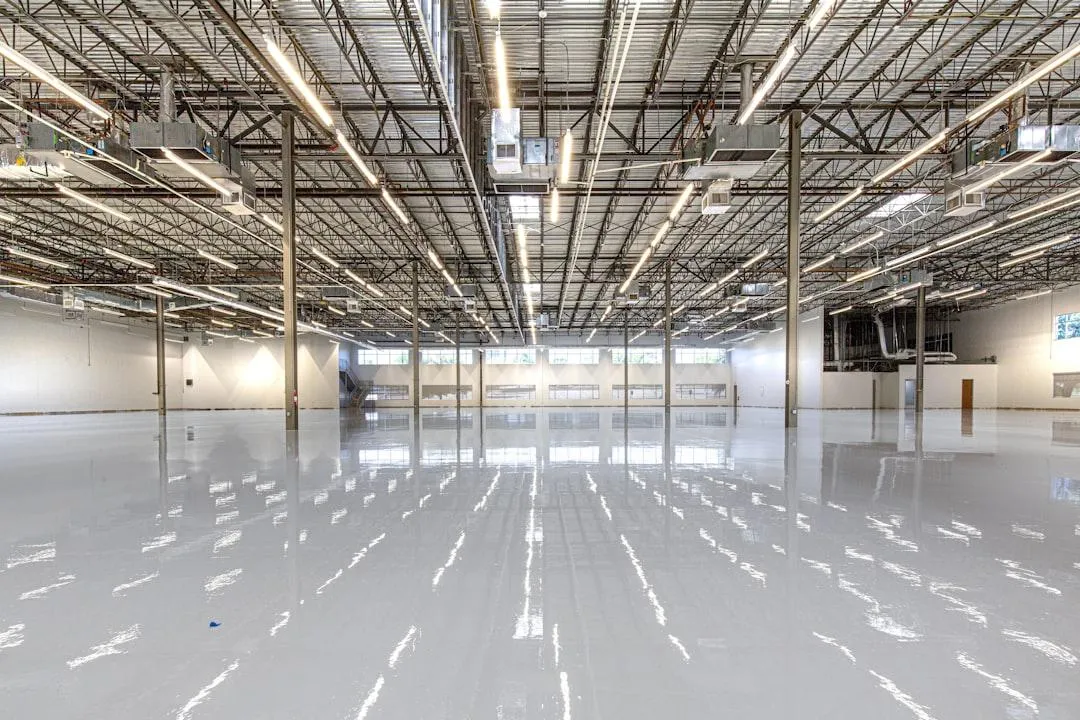
Industrial Non Slip Floor Coatings: A Guide to Staying Grounded
Why Industrial Non Slip Coating Is a Safety Essential in Every Facility
Industrial non slip coating is a protective surface treatment applied to floors, ramps, and walkways to increase traction and reduce the risk of slips and falls in demanding work environments.
Here's a quick summary of what you need to know:
Topic Key Facts What it is A coating system with anti-slip additives (epoxy, urethane, thermal spray, acrylic) applied to industrial surfaces How it works Raises the coefficient of friction (COF) above 0.5 — the OSHA minimum for walking surfaces Common surfaces Concrete, steel, metal, tile, wood, diamond plate Typical lifespan 2 to 10+ years depending on coating type and traffic Key standards OSHA, ADA, ANSI/NFSI, ASTM F609 Best for Warehouses, manufacturing plants, food processing, loading docks, marine decks
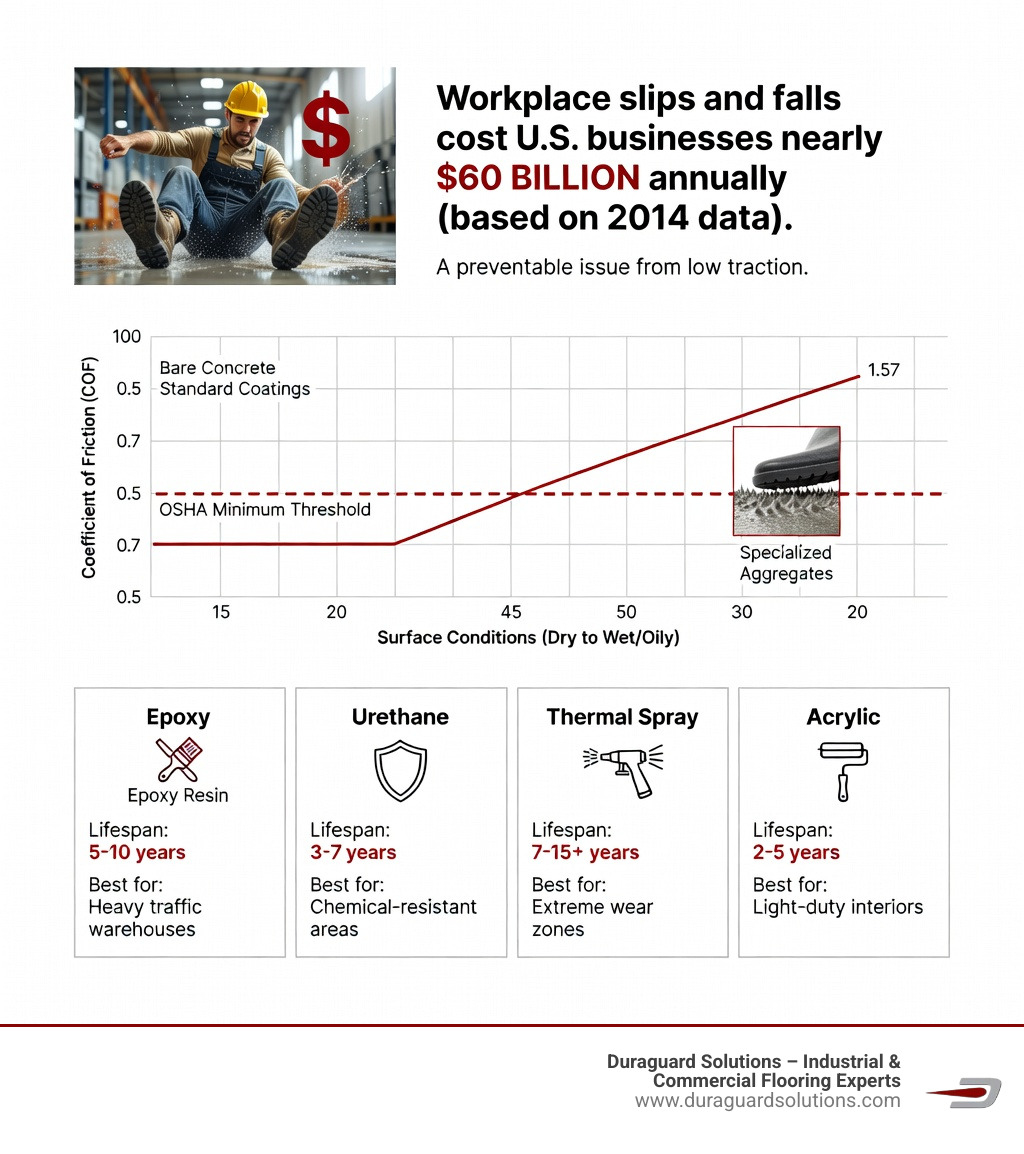
Slippery floors are a serious problem in industrial settings. In 2014 alone, workplace injuries and illnesses cost U.S. businesses nearly $60 billion. A large share of those incidents come down to one preventable cause: inadequate floor traction.
Bare concrete sits at roughly a 0.5 coefficient of friction — right at OSHA's minimum threshold. Add moisture, oil, or heavy traffic, and that number drops fast. A quality non-slip coating system pushes that number to 0.7 or higher, giving workers a meaningful safety margin.
For facility managers in manufacturing, food processing, or warehousing, the right coating system isn't just a compliance checkbox. It's an investment in uptime, worker safety, and long-term floor performance.
I'm Mark Barr, Owner of Duraguard Solutions and a specialist in industrial and commercial floor coating systems, with hands-on experience designing and installing industrial non slip coating solutions for warehouses, food processing plants, and manufacturing facilities across Wisconsin and Illinois. In this guide, I'll walk you through everything you need to choose, apply, and maintain the right system for your facility.
Understanding Industrial Non Slip Coating Technology
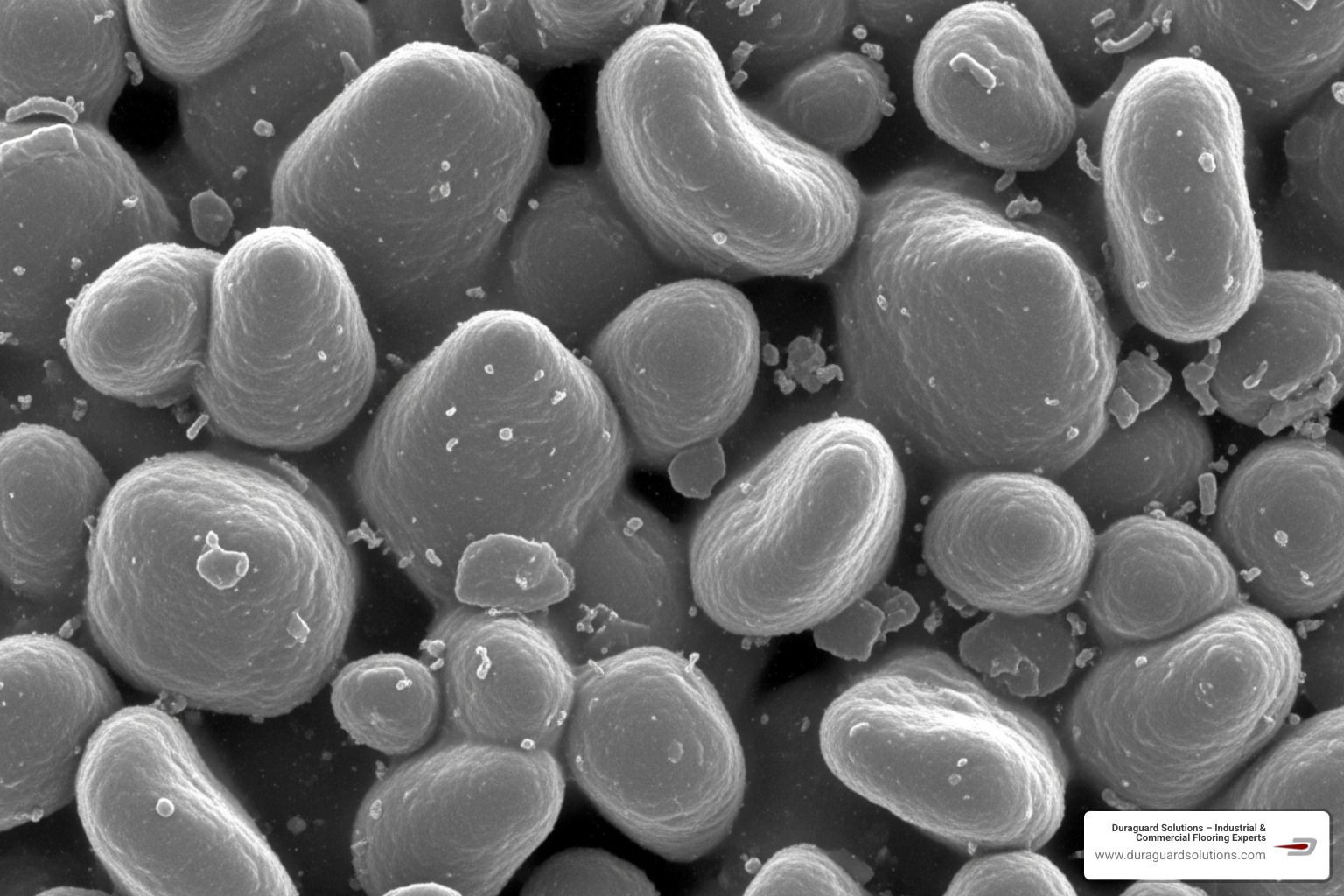
When we talk about an industrial non slip coating, we aren't just talking about thick paint. These are engineered systems designed to manipulate the physics of a walking surface. At a microscopic level, these coatings create "peaks and valleys" that bite into footwear or tires, providing the mechanical grip necessary to prevent sliding.
The science behind this is measured by the Coefficient of Friction (COF). A higher COF means better traction. While bare concrete might hover around 0.5, a high-performance system can achieve ratings of 0.7 or even much higher—some specialized aggregates reach a COF of 1.57.
These systems offer more than just grip; they provide a "profile" to the floor. In a facility where oil or water is present, this profile allows the liquid to sit in the "valleys" while the "peaks" maintain contact with boots or wheels. Beyond safety, these coatings offer incredible durability and chemical resistance, protecting your underlying slab from the rigors of heavy machinery and harsh cleaning agents. For those managing complex environments, More info about high-performance industrial flooring can help clarify which system handles heavy-duty stress best.
Selecting the Right Industrial Non Slip Coating for Your Facility
Choosing the right system depends on your specific "villain"—is it water, grease, blood, or simple dust?
Epoxy Systems: The workhorse of the industry. 100% solids epoxy is incredibly tough and allows for various levels of aggregate (grit) to be broadcast into the wet resin.
Urethane Coatings: Often used as a topcoat, urethanes provide excellent UV resistance and chemical protection. Urethane mortars are particularly popular in food processing where thermal shock is a factor.
Thermal Spray: A heavy-duty option often used on metal. Processes like twin wire arc spray apply metal coatings that are incredibly lightweight but offer a lifespan of up to 10 years.
Acrylic Treatments: These are often "invisible" treatments for tile or stone, creating a microscopic tread without changing the floor's appearance.
Aggregate Types: This is the "grit." Options range from soft polymeric grits to ultra-hard aluminum oxide or silicon carbide.
Safety Standards and Regulatory Compliance
In our line of work across Illinois and Wisconsin, compliance isn't just a suggestion—it's the law. Several bodies regulate how "grippy" your floors must be:
OSHA: Requires a COF of at least 0.5 for walking surfaces.
ADA: Recommends a higher COF (often 0.6 for flat surfaces and 0.8 for ramps) to ensure accessibility for those with disabilities.
ANSI/NFSI: The National Floor Safety Institute provides rigorous standards for "High Traction" certification.
Failure to meet these can lead to more than just fines; it opens a business up to massive liability. To ensure you are using products that meet these bars, always consult the Technical Data Sheet for safety standards and the Safety Data Sheet for chemical handling to understand the VOC levels and slip-resistance ratings.
Testing Standards for Industrial Non Slip Coating
How do we know a floor is safe? We use specialized tools like a slip meter to measure the Static Coefficient of Friction (SCOF). The ASTM F609 is a common standard used to evaluate the traction of footwear on various surfaces. When we install a system, we aren't just guessing; we are aiming for a certified High Traction finish that stays consistent across the entire facility.
Types of Industrial Non Slip Coating Systems
Not all coatings are created equal. Depending on whether you're coating a loading dock or a sterile lab, the chemistry changes.
Coating Type Best Use Case Key Benefit 100% Solids Epoxy Heavy manufacturing, warehouses High build, impact resistant Urethane Cement Food & beverage, thermal shock Hygienic and heat resistant Polyaspartic Rapid return-to-service Fast cure, UV stable Thermal Spray Marine decks, steel ramps 10-year lifespan, corrosion protection
For a deeper dive into the chemistry of these options, you can find More info about polymer flooring systems on our site.
Surface Compatibility for Industrial Non Slip Coating
We often get asked if these coatings only work on concrete. The answer is no! While concrete is the most common substrate, high-performance industrial non slip coating products can be engineered to bond to:
Steel and Metal: Including diamond plate and smooth steel.
Tile: Ceramic, quarry, and mosaic tiles often found in commercial kitchens.
Wood: Cured wood in mezzanine or storage areas.
Fiberglass: Common in marine and specialized industrial components.
Application and Surface Preparation Best Practices
If there is one thing we preach at Duraguard, it's that the coating is only as good as the prep. You could buy the most expensive epoxy in the world, but if you put it on a dirty or oily floor, it will peel like a sunburn.
The process usually begins with mechanical preparation—diamond grinding or shot blasting—to "open up" the pores of the concrete. We also perform a moisture test (often using a plastic sheet test or a moisture meter) and a porosity check. If water beads up on your concrete, the coating will too.
For those looking for a visual guide, check out this Application Instructions and Video or download the Instruction PDF for surface prep to see the level of detail required for a professional bond.
The Coating Application Process
Once the surface is prepped, the clock starts ticking.
Mixing: Most industrial coatings are two-component (resin and activator). They must be mixed at specific RPMs for a set amount of time (usually 1-3 minutes).
Pot Life: This is the time we have to apply the product before it hardens in the bucket. For many epoxies, this is about 60 minutes.
Curing Time: While you can often walk on a floor in 10-12 hours, heavy vehicle traffic (like forklifts) usually requires 48 to 72 hours.
Coverage: Typically, a high-build epoxy provides about 100-130 sq. ft. per gallon at a thickness of 12-16 mils.
Common Applications and Environmental Considerations
Where do these systems shine? In any environment where a "oops" can lead to a "911."
Warehouses: High-traffic aisles and forklift ramps need aggressive textures to prevent skidding. More info about warehouse flooring.
Food Processing: These floors must be non-slip even when covered in water, fats, or oils. They also must be CFIA compliant and easy to sanitize. More info about food processing flooring.
Marine Decks: Steel surfaces exposed to salt water are a recipe for disaster without thermal spray or specialized epoxy coatings.
Aircraft Hangars: Resistance to Skydrol (aviation fluid) and high visibility are key.
Maintaining Your Industrial Non Slip Coating for Longevity
A common myth is that non-slip floors are "maintenance-free." While they are incredibly durable, they do require proper housekeeping. Dust and oil can fill the "valleys" of the texture, effectively smoothing out the floor and making it slippery again.
Regular cleaning with a stiff-bristle brush or a power washer is recommended. However, be careful—aggressive aggregates can sometimes "eat" through cheap mops. We recommend testing your cleaning process on a small area first. For more details on long-term care, refer to the Additional Product Information Brochure.
Frequently Asked Questions about Industrial Safety Coatings
Can non-slip coatings be used in oily or wet environments?
Yes! In fact, that is exactly what they are designed for. Systems using aluminum oxide or silicon carbide aggregates are specifically engineered to maintain traction even when submerged in oil, grease, or water. The texture allows the liquid to displace, ensuring the shoe makes contact with the solid aggregate.
How long do industrial anti-slip coatings typically last?
Lifespan varies by technology. A standard epoxy with broadcast grit might last 5-7 years in a high-traffic warehouse. Specialized thermal spray coatings have been independently reported to last up to 10 years or more, often outlasting traditional paint-based options by five times.
Are non-slip coatings difficult to clean?
It’s a trade-off. The more aggressive the traction, the more "stuff" can get caught in the texture. However, using the right chemicals and mechanical scrubbers makes it manageable. We always suggest installing a test strip to ensure your cleaning crew can handle the texture before we coat the whole 50,000 square foot facility!
Conclusion
At Duraguard Solutions, we’ve seen how a properly installed industrial non slip coating can transform a hazardous workplace into a model of safety and efficiency. Whether you are operating a manufacturing plant in Milwaukee or a warehouse in Chicago, the ROI of safety is undeniable. Reduced insurance premiums, fewer worker's comp claims, and a more confident workforce are the hallmarks of a well-protected floor.
Ready to ground your facility with a high-performance system? Contact Duraguard Solutions today for a consultation. We serve all of Illinois and Wisconsin with seamless, hygienic, and—most importantly—safe flooring solutions.
