
Polyaspartic vs Epoxy: Which Coating Survives a Wisconsin Winter?
Does Polyaspartic Coating Actually Survive a Wisconsin Winter?
Polyaspartic coating Wisconsin garages is one of the smartest upgrades you can make if you're dealing with road salt, freeze-thaw cycles, and concrete that's slowly falling apart.
Here's the quick answer most people need:
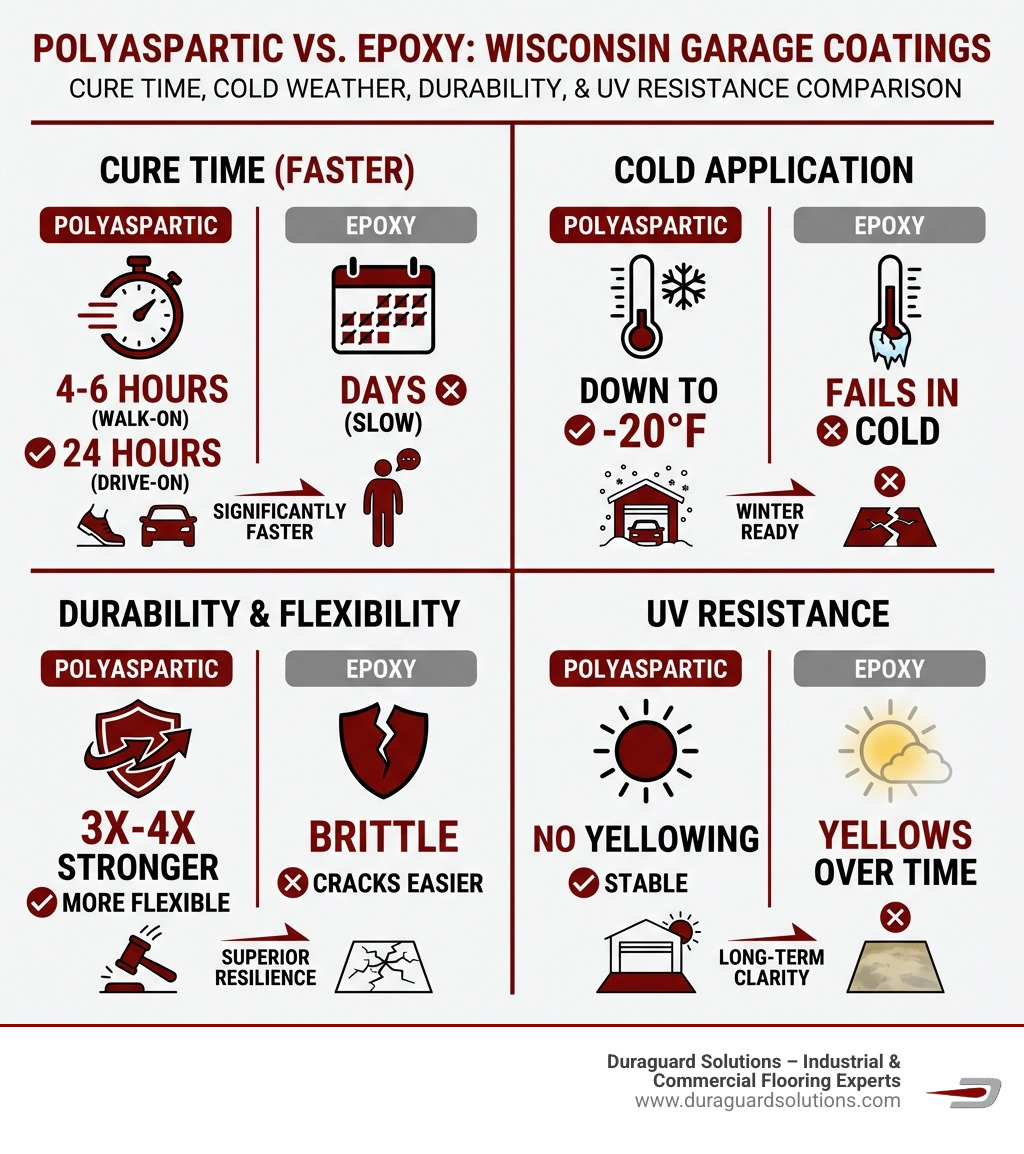
Question Answer Is polyaspartic better than epoxy for Wisconsin winters? Yes - it's more flexible, cures faster, and handles extreme cold Can it be applied in cold weather? Yes - down to -20°F, unlike epoxy How long until I can use my garage? Walk on it in 4-6 hours, drive on it in 24 hours How much stronger is it than epoxy? 3x-4x stronger, with 30% more elasticity How long does it last? At least 15 years with proper installation
Wisconsin winters are brutal on garage floors. Salt, moisture, and repeated freeze-thaw cycles crack and pit concrete fast. Epoxy has been the go-to solution for decades - but it wasn't designed for these conditions. It yellows under UV, fails in cold temperatures, and takes days to cure.
Polyaspartic coatings were. And the difference matters more here than almost anywhere else in the country.
I'm Mark Barr, Owner of Duraguard Solutions and a protective coatings specialist with extensive hands-on experience designing and installing polyaspartic coating Wisconsin garages and industrial facilities across Wisconsin and Illinois. In this guide, I'll walk you through exactly how these two coatings compare - so you can make the right call for your floor before another Wisconsin winter does the deciding for you.
Understanding Polyaspartic Coating for Wisconsin Garages
When we talk about polyaspartic coating Wisconsin garages, we are talking about a high-performance, industrial-strength evolution of the traditional floor coating. Originally developed in the 1990s to protect steel bridges from corrosion, polyaspartic technology has been adapted for concrete because of its incredible bond strength and resilience.
The core advantage of polyaspartic chemistry lies in its molecular structure. It is a two-component, polymer-based system that is significantly more advanced than standard epoxy. While epoxy is rigid and can become brittle over time, polyaspartic is roughly 30% more elastic. This flexibility is vital in the Midwest, where concrete slabs expand and contract as the temperature swings from 90°F in August to -20°F in January.
In terms of raw power, polyaspartic systems are 3x to 4x stronger than epoxy. They offer superior abrasion resistance, meaning they won't scuff or wear down even under heavy vehicular traffic or the constant dragging of snowblowers and lawn equipment. This is particularly relevant when you consider that 63% of all U.S. households have a garage or carport, and for many Wisconsinites, the garage is the primary entry point to the home. If you want to learn more about how these high-end materials work, check out our deep dive into polymer flooring systems.
Why Polyaspartic Coating Wisconsin Garages Outperform DIY Kits
It is tempting to grab a "garage floor kit" from a local hardware store, but there is a massive gap between those DIY products and a professional polyaspartic coating Wisconsin garages installation. DIY kits are typically water-based epoxies with low solids content. They sit on top of the concrete like a thick layer of paint.
Our professional-grade systems are designed for superior adhesion. We use industrial-strength materials with low VOCs (Volatile Organic Compounds), meaning there’s virtually no off-gassing odor during or after installation. These systems penetrate deep into the pores of the concrete, creating a mechanical bond that resists peeling and delamination even when faced with high moisture vapor transmission. For demanding environments that require the toughest protection, we often recommend high-performance industrial flooring systems.
Chemical Resistance and Thermal Stability
A Wisconsin garage floor is essentially a chemical laboratory in the winter. Your car brings in a slurry of road salt, magnesium chloride, and slush. Polyaspartic coatings are non-porous and chemically resistant, meaning these corrosive elements can’t reach the concrete.
Furthermore, polyaspartic coatings are thermally stable. Once cured, they can tolerate temperatures up to 300°F. This makes them immune to "hot tire pickup"—a common problem with epoxy where hot tires from a recent drive literally bond to the coating and pull it off the floor as they cool. With polyaspartic, the high impact resistance and flexibility ensure the floor stays intact regardless of the season.
Polyaspartic vs. Epoxy: The Battle Against Road Salt and Freeze-Thaw
To understand why we favor polyaspartic for local garages, let's look at the data.
Feature Polyaspartic Traditional Epoxy Cure Time 24 Hours (Full Use) 3–5 Days (Full Use) Application Temp -20°F to 140°F 50°F to 90°F UV Stability 100% UV Stable (No Yellowing) Yellows/Chalks in Sunlight Flexibility High (30% more elastic) Low (Brittle) Abrasion Resistance 3x-4x higher than epoxy Standard
The freeze-thaw cycle is the silent killer of Wisconsin concrete. When water gets into the pores of untreated concrete and freezes, it expands, causing the surface to flake or "spall." Because polyaspartic is 30% more elastic than epoxy, it can move with the concrete during these cycles without cracking. If you are looking for a floor that can handle the most aggressive chemical environments, see our chemically resistant flooring systems.
Winter Application Capabilities
One of the biggest frustrations with epoxy is the limited installation window. Epoxy requires warm temperatures (usually above 50°F) to cure properly. If you miss the "summer window," you’re stuck with a dusty, salt-stained floor until next May.
Polyaspartic coating Wisconsin garages can be installed year-round. Because these coatings cure through a chemical reaction rather than evaporation, they can be applied at temperatures as low as -20°F. This rapid curing means that even in the dead of winter, we can bond a high-strength coating to your concrete, providing protection exactly when you need it most.
Slip Resistance and Safety Standards
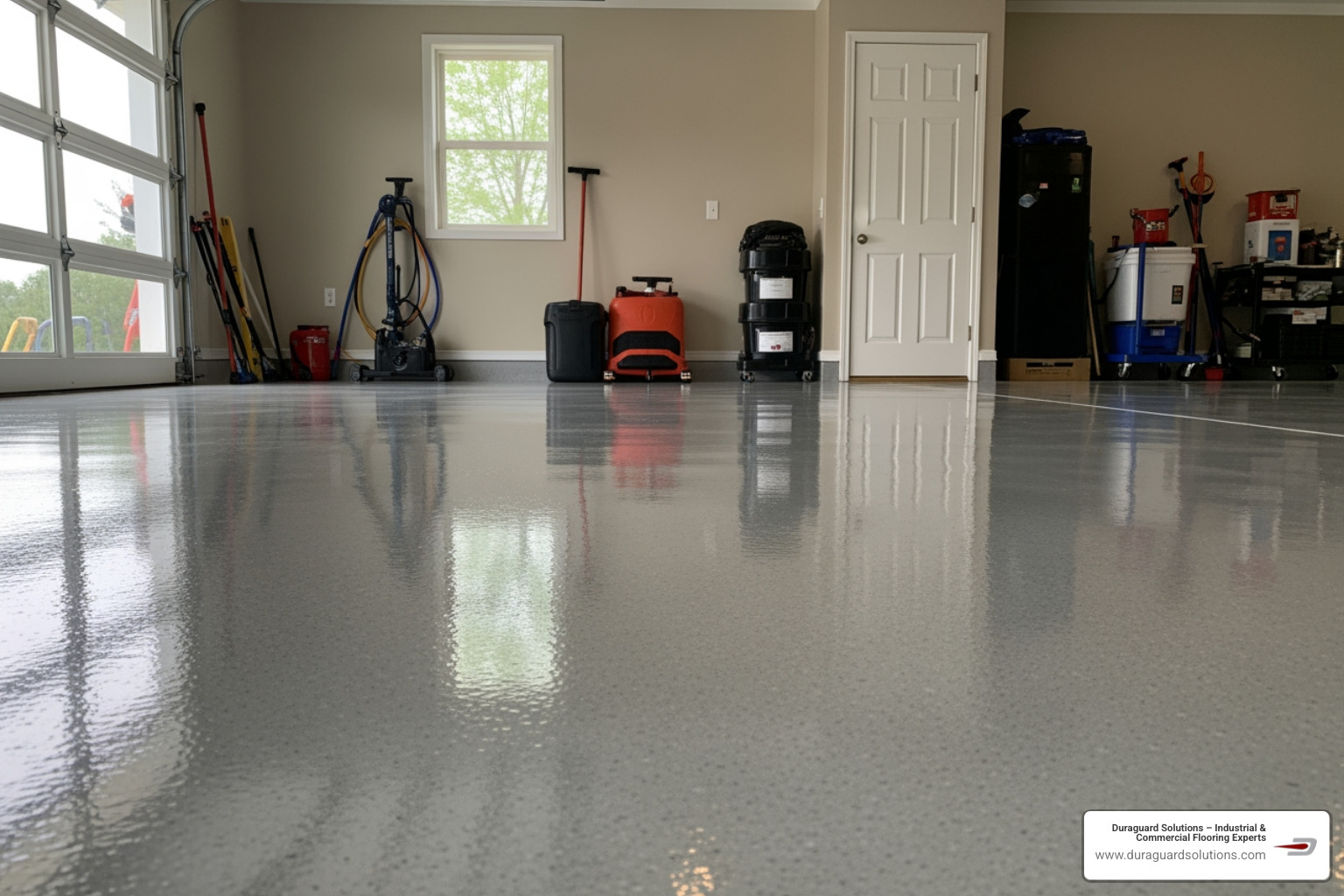
Safety is a major concern, especially when snowy boots meet a smooth garage floor. While a bare polyaspartic topcoat can be slick when wet, we use a "full chip" broadcast system. This involves broadcasting decorative vinyl flakes into the base coat, which creates a textured, slip-resistant surface.
Our coatings are designed to exceed safety standards. While bare concrete typically measures around a 0.5 on the slip meter, and the (OSHA) has slip resistance requirements for floors of at least 0.6, our textured polyaspartic systems typically achieve a rating of 0.7. This gives you extra "grip" even when the floor is covered in winter slush.
The Installation Process: From Pitted Concrete to Showroom Floor
A great floor is 90% preparation and 10% application. We don't just "paint" the floor; we re-engineer the surface.
The process begins with diamond grinding. We use heavy-duty industrial grinders to remove the top layer of "laitance" (weak concrete) and open up the pores. This creates a profile similar to sandpaper, which is essential for the polyaspartic to "bite" into the slab. During this phase, we also address any structural issues, such as cracks or deep salt pitting. For those interested in the latest in concrete finishes, polished concrete trends show that preparation is the key to any successful project.
Restoring Damaged Concrete with Polyaspartic Coating Wisconsin Garages
Older Wisconsin garages often suffer from "spalling"—where the top layer of concrete has chipped away due to years of salt exposure. We use specialized polyurea and polyaspartic fillers to bridge these gaps and level the floor.
In some cases, we also install vapor barriers if the concrete has high moisture levels. This prevents hydrostatic pressure from pushing the coating off the floor from underneath. If your garage or basement is prone to moisture, you might want to explore our waterproof flooring options to ensure long-term success.
One-Day Installation Timeline
The most impressive part of the polyaspartic coating Wisconsin garages process is the speed. A traditional epoxy job can put your garage out of commission for a week. With our polyaspartic system, the timeline looks like this:
Preparation: Diamond grinding and crack repair (Morning).
Base Coat & Broadcast: We apply the pigmented base coat and broadcast the decorative flakes to refusal (Late Morning).
Recovery & Topcoat: We scrape off the excess flakes and apply the clear, UV-resistant polyaspartic topcoat (Early Afternoon).
Return to Service: You can walk on the floor in 4–6 hours and park your car back in the garage in 24 hours.
Cost, Customization, and Choosing a Contractor in Wisconsin
Investing in a professional garage floor is about long-term value. While costs can vary based on the condition of your concrete, a high-quality flake concrete coating typically ranges between $7.00 and $8.00 per square foot. Most professional installations in the region have a minimum project price of around $3,200, which covers the mobilization of industrial equipment and certified crews.
Aesthetic Options for Modern Garages
You aren't limited to "industrial gray." Modern polyaspartic coating Wisconsin garages offer incredible customization. You can choose from:
Granite and Terrazzo Patterns: Multi-colored flakes that mimic natural stone.
Metallic Pigments: For a high-end, marbled look often seen in showrooms.
Custom Color Matching: We can match the floor to your home’s siding or even your favorite sports team’s colors.
Special Order Colors: Using high-quality Torginol flakes, we can create a signature look that is unique to your home.
For more inspiration on how to beautify your space, take a look at our decorative flooring systems.
Selecting a Wisconsin Coating Specialist
When choosing a contractor, look for someone who understands the local climate. We serve a wide area, including Southeastern Wisconsin, Madison, the Fox Cities, and Milwaukee. A reputable specialist should offer:
Meticulous Prepping: If they aren't diamond grinding, the floor won't last.
Certified Crews: Proper mixing and application of polyaspartics require specialized training because the material cures so quickly.
Solid Warranties: Most top-tier residential coatings come with a 15-year to 25-year warranty, while commercial projects often carry a 15-year guarantee.
Frequently Asked Questions about Garage Coatings
How do I maintain my polyaspartic garage floor?
Maintenance is incredibly simple. Because the surface is non-porous, dirt and salt sit on top. A simple broom or a leaf blower handles most daily debris. For a deeper clean, use a mop with warm water and a mild cleaner like Simple Green. For winter salt spots, a diluted Parsons Ammonia solution works wonders. Just squeegee the excess water out the door, and your floor looks brand new.
Are these coatings suitable for commercial warehouses?
Absolutely. The same technology we use for polyaspartic coating Wisconsin garages is used in heavy-duty industrial settings. For areas with extreme traffic or chemical exposure, we often utilize assembly and warehouse flooring systems or urethane cements to provide the necessary durability.
How quickly can I use my garage after installation?
This is the "killer app" of polyaspartic. You can typically walk on the floor in 4 to 6 hours. You can move your heavy toolboxes and park your vehicles back inside in just 24 hours. Even in winter, the rapid return-to-service remains consistent, though cure times may shift slightly depending on the exact temperature.
Conclusion
At Duraguard Solutions, we’ve seen how the right coating can transform a crumbling, salt-stained garage into a clean, durable extension of the home. Wisconsin’s climate doesn’t play fair, and traditional epoxy simply can’t keep up with the thermal swings and chemical assaults of a Midwestern winter.
By choosing a polyaspartic coating Wisconsin garages, you are investing in industrial-grade protection that offers long-term value, safety, and a "showroom" aesthetic that lasts for decades. Whether you have a residential two-car garage or a massive commercial facility, our team has the expertise to ensure your concrete is protected for the long haul.
Ready to protect your floor? Contact Duraguard Solutions for a Free Estimate today and let's get your project started.
